
The recent deaths of 37 suspected illegal miners in the custody of the Nigeria Security and Civil Defence Corps (NSCDC) in Minna, Niger State, have raised serious questions about illegal mining, enforcement and the safety of people working in Nigeria’s mining communities.
The 37 people were reportedly arrested during operations targeting suspected illegal mining activities in the M.I. Wushishi and Lukoto areas of Niger State. Investigations are ongoing into the circumstances surrounding their deaths.
Beyond the immediate investigation into the deaths, the incident raises a broader question: do people living and working in mining communities understand the legal requirements for mining, the safety standards that should apply, and the authorities responsible for enforcing them?
So, what does Nigerian law say?
Who owns the minerals found on your land?
In our work across mining communities, we found that many host-community members believe they own the minerals because the resources are located on their land.
Finding gold, lithium, tin, or another mineral on your land does not automatically mean that you own the mineral.
Under Section 1 of the Nigerian Minerals and Mining Act, 2007, the entire property in and control of minerals in, under or upon any land in Nigeria is vested in the Government of the Federation, for and on behalf of the people of Nigeria.
In practical terms, this means that owning or occupying a piece of land is different from owning the mineral resources found beneath or upon it. A landowner cannot simply begin extracting or selling minerals because they have been discovered on their property. Mining activities are subject to the relevant laws, licences and approvals.
However, this does not mean that landowners and occupiers have no rights.
Where a mineral title application covers private land, the law provides for notice to the owner or occupier and, in certain circumstances, requires consent before the title can be granted. The law also provides for surface rent and compensation in connection with mining operations in specified circumstances.
For communities, understanding this distinction is important: the mineral may belong to the government, but that does not erase the rights and interests of the people who own or occupy the land where mining takes place. Before mining begins, communities should understand what rights they have, what approvals are required, and what compensation or other protections may apply.
Are artisanal miners illegal miners?
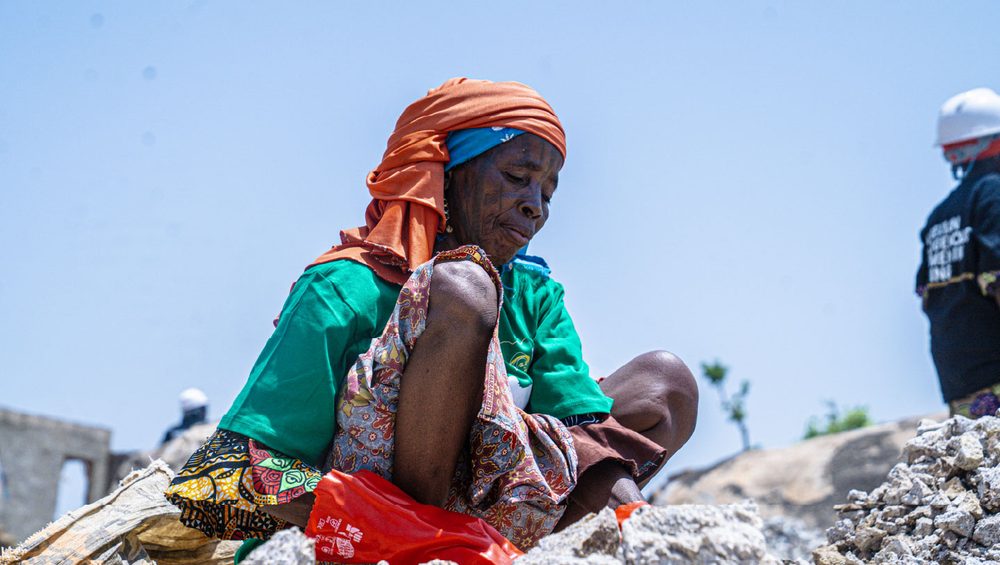
Artisanal mining is not, by itself, illegal. The important distinction is between artisanal mining, a form of small-scale mineral extraction, and mining conducted without the required legal authorisation.
Artisanal mining generally involves the use of simple, often non-mechanised methods to search for, extract and process minerals on a small scale. It is commonly carried out by individuals, families, groups or cooperatives, often with limited access to machinery, finance, technology and formal markets.
Under Nigerian law, artisanal mining is addressed within the broader small-scale mining framework. The Nigerian Minerals and Mining Act, 2007, contains provisions governing small-scale mining and recognises artisanal miners and registered mining cooperatives. The legal framework also provides for government extension services to support small-scale and artisanal miners with technical and other assistance.
This means that being an artisanal miner does not automatically make someone an illegal miner. The key question is whether the mining activity is being conducted in accordance with the applicable legal requirements, including the appropriate mining title, registration or authorisation.
A person may therefore be an artisanal miner but still be operating illegally if they extract minerals without the required authorisation, operate outside the terms of their mining title, mine in prohibited areas, or otherwise violate applicable mining and environmental requirements.
What makes mining legal?
One of the key steps to operating legally is obtaining the appropriate mineral title.
Section 5(4) of the Nigerian Minerals and Mining Act, 2007, designates the Mining Cadastre Office as the agency responsible for the administration of mineral titles in Nigeria. Under Section 5(5), its functions include considering applications, issuing and suspending mineral titles, and processing transfers, renewals and modifications.
The recognised mineral titles include a Reconnaissance Permit, Exploration Licence, Small-Scale Mining Lease, Quarry Lease, Mining Lease and Water Use Permit.
For small-scale mining, the law allows eligible Nigerian citizens, mining cooperatives and companies to apply for a Small-Scale Mining Lease.
For artisanal miners, organising through a properly registered mining cooperative can therefore be an important pathway towards formalisation. The Ministry of Solid Minerals Development’s Artisanal and Small-Scale Mining Department works to organise artisanal and small-scale miners into legally identifiable mining cooperatives and associations. It also provides support in areas such as technical training, environmental management, health and safety, and access to finance.
Formalisation is therefore not simply about obtaining a licence. It can also help miners understand the rules governing their activities, access technical and safety support, and participate more effectively in the formal mining sector.
What are the risks of operating outside the regulatory framework?
Operating without the required mineral title or outside the conditions of a mining licence can have legal, safety, environmental and economic consequences.
Arrest, prosecution and penalties
Under Section 46(2) of the Nigerian Minerals and Mining Act, 2007, anyone who searches for or exploits mineral resources without the required mineral title or authority commits an offence. The Act also has a specific chapter on offences and penalties, including illegal mining.
Increased safety risks: normal mining operations are subject to health and safety requirements. When mining takes place outside the regulatory framework, miners may operate without adequate mine planning, safety procedures, inspections or protective measures. The Ministry of Mines and Steel Development has specifically identified the dangers associated with informal mining and has worked to organise informal miners into cooperatives and provide training.
Environmental damage
Mining operators have obligations relating to environmental protection, rehabilitation and reclamation. The Mining Act contains provisions on pollution, the protection of watercourses, the restoration of mined land, and environmental impact assessments. Operating outside the regulatory framework can therefore mean these safeguards are bypassed, potentially affecting water, farmland and surrounding communities.
Greater conflict with communities and landowners
Without clear documentation and agreements, disputes can arise over land access, compensation, environmental impacts and who has authority to mine an area. The legal framework contains provisions dealing with land access, compensation and community development agreements.
What does this mean for women in mining host communities?
For women working in mining communities, formalisation can be an important pathway to greater visibility, participation and access to opportunities in the mining sector.
However, having a legal framework is only one part of the solution. Women miners also need access to information about their rights and responsibilities, opportunities to participate in mining cooperatives and community decision-making, and training, finance, and safer working conditions.
This is where the work of the Nigerian Indigenous Women in Mining and Natural Resources Organisation (NIWIMNRO) becomes important. Over the past year, NIWIMNRO has trained more than 200 women artisanal miners across six Nigerian states on technical mining skills, occupational safety, business development and their rights as miners.
The organisation has supported women to form cooperatives that can pursue mining licences and participate in formal commercial mining activities, helping miners understand how a collective organisation can improve their access to formal opportunities.
NIWIMNRO advocates for the formalisation, safety, and empowerment of women in mining, while working to ensure that women are not excluded from conversations and decisions that affect their livelihoods and communities. Through advocacy, awareness-raising, capacity building, and community engagement, NIWIMNRO seeks to help women better understand the policies and laws governing mining and strengthen their ability to participate meaningfully in the sector.
For NIWIMNRO, formalisation should not be viewed only as an enforcement measure. It should also be an opportunity to ensure that women miners can access the systems, information, resources and decision-making spaces they need to operate safely and participate fully in the mining sector.